Sunday, December 20, 2009

The Results Are In!

The "Favorite Classic Christmas Movie" poll closed last night, and the results are as follows.


It's A Wonderful Life (1946) won with 57% of the votes. Hooray for George Bailey! I had a feeling this movie was going to win. I mean, who doesn't love it?


The runner-up was the 1938 version of A Christmas Carol.


3rd place - White Christmas (1954).


Christmas In Connecticut (1945) and Holiday Inn (1942) both recieved 0 votes. However, they are still very enjoyable movies that are great to watch around this time of year, especially.


Thanks for voting! I just saw Holiday Inn and White Christmas on the big screen last night, and I'm planning on posting about that soon. In the meantime, why not take a look at my other blog, The Fabulous '40s? It's just getting started, and I probably won't post as much as on this blog, but I hope it will be fun.

Friday, December 18, 2009

So, Ginger Couldn't Take The Last Piece

Hey everybody! Earlier today I watched Vivacious Lady (1938) starring Ginger Rogers and James Stewart, and it reminded me of how much I love that film. My two favorite stars co-starring in the same movie--what could be better? Nothing. At least, nothing that I can think of right now. This movie is full of very funny moments. Almost every scene makes me laugh. Especially the cat fight scene between Ginger and Frances Mercer who plays the proper girl Jimmy's father wants him to marry (DEFINITELY the best part of the movie!) , and the scene where Jimmy is teaching his botany class while drunk. Oh, and the boat scene! If I have time this weekend, I’ll try and write a full length movie review, but if not, that’s my two-cents on one of the funniest classic comedies. I leave you with Ginger having it out with Frances Mercer. Ha ha ha.

Thursday, December 17, 2009

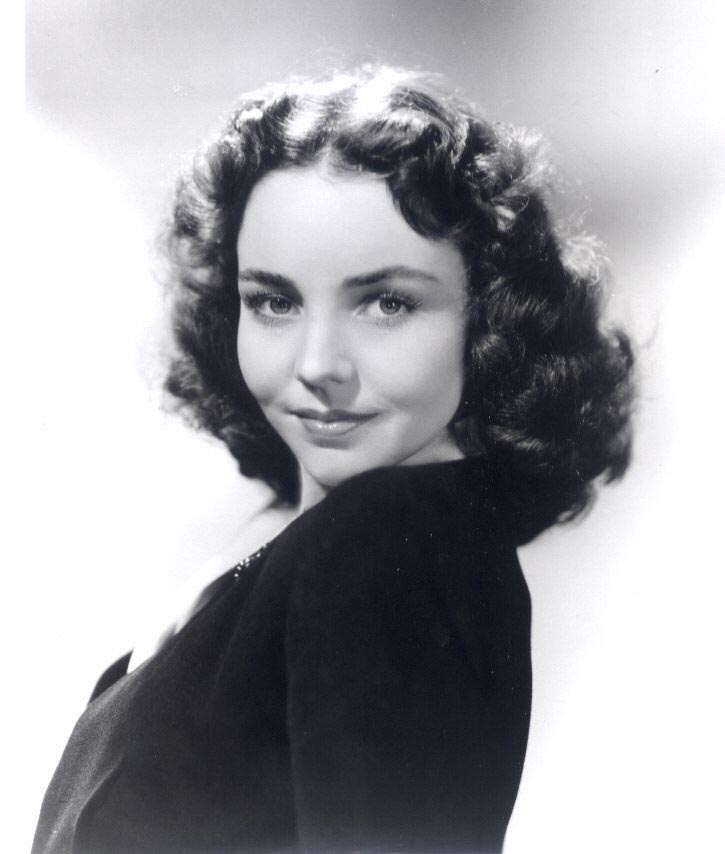
R.I.P Jennifer Jones


(1919-2009)


I just found out that Jennifer Jones died today. I hate when classic stars die; it's so sad to lose someone from the golden era. Miss Jones starred in many films throughout the 1940's and 1950's notably: The Song of Bernadette (1943, for which she won a Best Actress Academy Award), Duel In The Sun (1946), Portrait of Jennie (1948), Love is a Many-Splendored Thing (1955), among others. She will be greatly missed.

Wednesday, December 16, 2009

8 Followers & Dean Martin

I am delighted to announce that Sap Dancing now has eight followers! Just wanted to share....

My first semester final exams start on Friday, and Dean Martin has been calming my nerves. Not that I'm that nervous, but I usually like to hear Frank Sinatra sing whenever I have the jitters about something. But for some reason (don't ask me why), I wanted to hear Dino this time.


I love this photo. Who else could make smoking look that cool?

Sunday, December 13, 2009

The Sky's The Limit (1943)

I don't think I'm alone when I say that I'm an admirer of Fred Astaire's work. He was a genius in everything he did. His dancing is perfection and he really was a wonderful actor. The Sky's The Limit (1943) is no exception to that.

Upon completing another successful mission, Flying Tigers Fred Atwell (Fred Astaire, he looked so handsome in that uniform!), Reginald Fenton (Robert Ryan) and Richard Merlin (Richard Davies) are given a hero's welcome and a ten-day leave. The three pilots are then sent cross-country on a personal appearance tour, but when Fred tires of the acclaim and attention, he jumps off the train in a small western town, dons a cowboy hat and boots and hitches a ride to New York City.

At a nightclub, Fred becomes infatuated by celebrity photographer Joan Manyon (Joan Leslie). Bored with snapping celebrity photographs, Joan begs her boss, magazine publisher Phil Harriman (Robert Benchley), for a war-related assignment. Fred then tries to get Joan's attention, adorably popping into her shots and then follows her to a diner after she finishes work. Reluctant to discuss his work, Fred introduces himself as Fred Burton and receives a lecture from Joan about the seriousness of the war. After following Joan home, Fred rents a room in her apartment building, and the next morning, she awakens to find Fred cooking breakfast in her kitchen. Joan then delivers another lecture to Fred about his lack of commitment.

Joan agrees to join him for dinner if he will talk to Harriman about a job the next day. That night, Joan insists upon going to work at the Canteen, where she and Fred are drafted to fill in for a dancing act. After completing his performance, Fred sees Reg and Richard at the Canteen and begs them to keep his identity secret. The next morning, Reg visits Fred at his apartment with orders to report to duty in two days.

Fred, however, keeps his appointment with Harriman. When Harriman discloses that Joan has refused his marriage proposal, Fred offers him advice about how to woo her and suggests that Harriman invite her to a romantic dinner at his apartment that night. Following Fred's advice, Harriman invites Joan to dinner, but when he realizes that she has fallen in love with Fred, he tells her that Fred is waiting for her at the apartment. That night, Joan proposes marriage to a surprised Fred and insists upon introducing him to Harvey J. Sloane, the founder of Sloane Aircraft, so that he can ask for a job.


The night before Fred is to rejoin his squadron, he accompanies Joan to a banquet honoring Sloane. When Fred insults Sloane about the performance of his aircraft, Sloane tells Joan, who angrily walks out on Fred. Harriman then invites Fred to join him at his favorite bar, where he discloses that he knows Fred's true identity. Fred confides that although he loves Joan, he is unable to make a commitment to her because of the risky nature of his calling. He then launches into the famous "One For My Baby" dance number. I don't want to spoil the ending for you, so I'll stop there.

The Sky's The Limit is a delightful movie sprinkled with charm. I went into it already loving Astaire, but found by the end of the film that I was now a Joan Leslie fan. She was absolutely wonderful in this movie, and she was only 18!

"A Lot In Common With You", the number performed by Astaire and Leslie at the Canteen, was my favorite number from the whole movie! It was so fun and upbeat, and I loved the choreography. "My Shining Hour" was a song I already knew, but still wonderful to hear in the movie. And "One For My Baby" was a terrific dance performed as only Mr. Astaire could perform it. There was one line Fred Astaire said in the beginning of the movie when Joan Leslie tells him she is supposed to be taking pictures, he replies: "Couldn't I be the fellow who never gets his name mentioned? The one they call 'a friend'? You know: 'Ginger Rogers - and friend.'". Haha! I loved that part! Also worth mentioning is the marvelous wardrobe worn by Miss Leslie. Her clothes and hairstyles were so lovely in this film.

Another thing to note is that Astaire alone was credited for the choreography in this movie, which was a departure for him since he was always credited with another choreographer. Actually, this whole movie was sort of a departure for him. In this film, he played a troubled pilot. Set during wartime, the script provided him with his first opportunity to act in a serious dramatic role, which I think he did very well with. I honestly didn't expect to like this film as much as I did, and I highly recommend it to any fan of Fred Astaire.


Saturday, December 12, 2009

Happy Birthday To Frank Sinatra!

1915-1998

I don't think there are words to describe how much I adore this man. I can think of no other singer that can pour out so much emotion in one song: elation, despair, and everything in between. Sure, his voice wasn't technically the best, and some people may resent the fact that so many people think he's the best singer of all time. But it wasn't all in the voice. He contributed so much to the music industry, with his concept albums and all. I listen to him everyday (really!), and through his music, I feel like I knew him. He had the ability to make you think that.

Happy 94th birthday, Frankie!

Wednesday, December 9, 2009

Feedback Please!

Hey, everybody! This isn't really a post - I was just hoping that I could get some feedback about my blog's new header. I decided it was time to decorate my blog for Christmas. So if you could tell me what you think of the new header, I'd be really appreciative! Thanks!

Sunday, December 6, 2009

Get Yourself In The Spirit

The Christmas spirit, thst is!

Well. maybe not as extreme as Deanna Durbin dressing like a Christmas tree.

Jean shows off her newly decorated tree...

While Anita waits under the mistletoe!


Ginger is surrounded by Santas! She must have been a very good girl this year.

Donna Reed is an old pro at decorating Christmas trees.


Jimmy and Margaret exchange gifts.


While Barbara and Dennis gor for a sleigh ride.

It looks like Gene Tierney is playing Santa! Be careful Gene, don't fall and drop the presents. Those sidewalks can be icy.


Frankie and Nancy know the holidays are all about family.


After finishing the decorations, Jean Harlow and Bill Powell, hosted a Christmas party.

Saturday, December 5, 2009

Train Songs Of World War II

I was listening to "Chatanooga Choo Choo" by Glenn Miller eariler this morning, and realized that a lot of the songs from World War II had some mention of trains. Here are some other locomotive songs that I thought of:

CHATANOOGA CHOO CHOO (1941)


"Pardon me, boy, is that the Chatanooga Choo Choo?" This hip tune is still wonderful today. As always, the brass section of the Glenn Miller Orchestra is fantastic and sounds exactly like a train at times. I also love the lyrics. My favorite verse is, "There's gonna be/A certain party at the station/Satin and lace/ I used to call funny face." Nothing like hearing this song performed by my favorite band leader. The Andrews Sisters version is quite good, too.

I Thought About You (1939)


Some of my favorite songs were written by or with Johnny Mercer, and this one seems particularly special. The melody is haunting and the lyrics are poignantly beautiful.

Blues in the Night (1941)

Yet another Johnny Mercer song. I love Judy Garland's version of this song. Her voice evokes images of the pain and suffering of a once naive little girl who is now a hardened, lonely woman. The memory of a man who took advantage of her innocence and then left her still haunts the woman, and she hasn't even the relief of forgetting during a night's sleep.

On the Atchison, Topeka & Santa Fe (1944)

More Mercer! Judy Garland introduced this wonderful song in The Harvey Girls (1946). It's a delightful number with a great vocalization by Judy.

Take the "A" Train (1941)

I love this song. It has such a wonderful swing and melody, and the name itself is pretty great.

Sentimental Journey (1944)


The most famous recording of this song was performed by Doris Day with the Les Brown Orchestra. I'd rather hear Day perform it than anyone else. Her vocalization is so warm and tender. Within her voice is the suppressed feeling of... well... "wild anticipation."

Shoo-Shoo Baby (1943)

So maybe there isn't any mention of a train in this wartime song, but I've always had the feeling that the boy in the song is saying goodbye to his girl at a train station. Maybe it's just the way that "shoo shoo" sounds like "choo choo." Am I crazy? Probably.

As I finish up this post, I would like to add one last picture. It is of Fred Astaire and Ginger Rogers looking out of windows on... yes... a train! The picture is a still from RKO's The Story of Vernon & Irene Castle (1939). Although the story is set during the World War I era, the movie was made just as World War II was beginning.

Friday, December 4, 2009

The Pride Of The Yankees (1942)

We had our very first snowfall yesterday and Christmas lights and decorations are up everywhere you look-- so why am I writing about a baseball movie?

Well, because today marks the 5 month anniversary of July 4, 2009. Unknown to most people, this date had another significance besides it being a major holiday here in the United States. That day marked the 70th anniversary of legendary New York Yankees player Lou Gehrig's retirement from baseball.

On July 4, 1939, fans gathered at Yankee stadium for what was later called "Lou Gehrig Day" in his honor. The stadium was at full capacity, Yankees players were lined up on the field, the manager presented Gehrig with awards, and former teammate Babe Ruth even attended the event (he then played for the Boston Red Sox). At first, Gehrig was too emotional to speak, but then had the courage to utter his famous 'luckiest man' speech.

Now, the hard fact is that this really is a classic movie review, but also a tribute to the great Lou Gehrig. Since I wasn't on this site back in July, I thought I would do a small tribute to my favorite baseball player, who I only discovered because of the 1942 classic biopic on Gehrig's life The Pride Of The Yankees starring Gary Cooper and Teresa Wright.

I've read a decent amount on Lou Gehrig to say that this film was very well researched. Since Gehrig died in 1941 of ALS (commonly known now as Lou Gehrig's Disease), he was fresh in everyone's mind. Baseball was also the American sport. Just about everyone followed it; they knew the players, the stats. Baseball was "America's Pastime". Clearly, the studio was not going to completely ruin such an inspirational story as Gehrig's. It seems Hollywood put a lot of care into the film and really wanted it to be good. Gehrig was an American icon, a legend even then, and they knew that the whole country was mourning his death. They weren't going to disappoint them by releasing a picture that would be an insult to Gehrig's memory and legacy.


The film begins with young playing baseball in New York where he grew up. His mother especially disapproves of his dream of wanting to be a baseball player. Later, when she becomes sick, he ultimately signs with the New York Yankees to help pay fpr treatment and hospital bills.

Teresa Wright plays Eleanor Gehrig, Lou's wife. She gives a very heartfelt performance in this movie, always caring for Gehrig and wanting the best for him. I feel this is one of her best performances.

The last scene in the film was definitely the saddest and possibly my favorite scene from the entire movie. That part, and when Gehrig and later his find out he has a disease. Cooper does a marvelous job repeating Gehrig's speech and makes it very moving. Here is a video of Lou Gehrig's actual speech in 1939. And here is Cooper's version from the movie.


The film does a very nice job of chronicling the life of a true American hero. But there is one thing they left out of the film. Lou Gehrig actually appeared in a movie in 1938. A little-known 'B' Western entitled Rawhide. Personally, I'd only recommend this film to fans of Lou Gehrig. He plays himself, wanting to retire from baseball and goes to a ranch to rest, where he encounters trouble. The singing cowboy Smith Ballew was his costar. It is great to see Gehrig onscreen, even if the movie wasn't that great. For playing himself and not being an actor he dd a pretty swell job. Here are some clips from Rawhide, if you're really interested.

Overall, The Pride Of The Yankees is a wonderful movie based on the life of a great man. I highly recommend it.

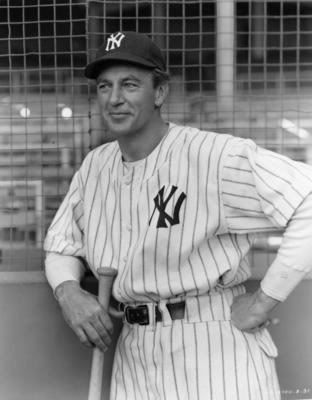
One more thing I'd like to add is that I feel Gary Cooper was just right for this role. He and Gehrig were very similar, at least in personality..

Here's a photo of Lou Gehrig:


And Gary Cooper:

As an added bonus, we even get Babe Ruth making an appearance in the movie, playing himself.

Wednesday, December 2, 2009

Bette Davis

You are going to be shocked when you read this, but I was not a Bette Davis fan until just recently. Sad, but true. Unfortunately I was deprived of Bette amazing-ness for my first 3 years of being a classic film fan.


I know, I must have been crazy for disliking this great screen icon, but that’s how it was for me. I disliked Bette, despite the fact that I really hadn’t any credibility when it came to judging her. I guess I just didn’t care about her one way or another, so I labeled her as easily dismissed.

To me, Bette Davis always seemed to have a icy and distant personality. She seemed so reserved. Despite all the good things I had heard about her, that's just how I felt, and I couldn't seem to get that notion out of my mind. I had never seen any of Davis' films until this past summer when I saw All About Eve (1950), and was not very impressed. Granted, I was half asleep because I was watching it late at night. That fact aside, Bette didn't make a huge impact on me.

It wasn't until three weeks ago that I saw Jezebel (1938) (which I was only watching for Henry Fonda) and realized how talented she really was. Her character and the storyline were both interesting, however, I wasn't blown away by her performance. (I know, you all think I'm screwy). I still wasn't a fan, but I did think she could act. So, I decided to give her another chance. It took a viewing of Now, Voyager (1942) to make me like Davis, and now I want to see more of her. Hopefully Bette Davis fans will forgive me for disliking her for so long.

After talking about Bette, I'm excited to watch Marked Woman (1937) tonight on TCM, which stars Bette with Humphrey Bogart. Since Bogie is in it too, hopefully I won't be dissapointed.

Tuesday, December 1, 2009

Pack Up Your Troubles

Last night, I watched You Can't Take It With You for the first time in months. It's a charming movie about a stenographer (Jean Arthur) who is the only normal one in her zany family. She falls in love with her boss (James Stewart) who is the vice-president of the powerful company owned by his greedy father (Edward Arnold).

Stewart's parents are appalled that he wants to marry a stenographer but to humor him, agree to dine with her family. This is doomed from the start, as they are a collection of free spirits with little visible means of support presided over by Arthur's wise grandfather (Lionel Barrymore). It also turns out that buying their house is key to tycoon Arnold's latest mega-project.

I thoroughly enjoyed You Can't Take It With You. It's a very feel-good movie and the message it sends is uplifting; not worrying about troubles or what other people think. Just like in any Capra film, the underdog triumphs which is always a delight to see. One of the many themes in the film is greed and corruption, but Arnold nevertheless demonstrates nuance and sensitivity as a man who, despite many flaws and faults, is redeemed by his love for his son.

Another thing I just picked up on while watching it again is its similarities with It's A Wonderful Life, the famous Holiday classic that was another Capra/Stewart collaboration and was made 8 years later. For instance, people collecting money to help characters out of a jam towards the end of the movie. Just like in the ending of It's A Wonderful Life. Also in both films, when a collection is taken up to settle a financial obligation, the original collector realizes his futility and adds his own contribution. Those are just some things I noticed that stood out to me. I'm sure there were more, as Capra liked to incorporate similar ideas into each of his movies.


There are many grand scenes between Stewart and Arthur, whom I feel have great on-screen chemistry.


This film won the Best Picture Academy Award in 1938 and also earned Frank Capra his third Best Director Oscar. You Can't Take It With You is a marvelous movie that can't be missed!